

Peer-to-peer fundraising software gives your supporters their own fundraising pages, so they can raise money for your cause by reaching out to networks your organization could never access directly. One appeal from your nonprofit typically reaches a fixed audience. Dozens or hundreds of individual appeals from people established in your community reach a much wider one. For nonprofits, that shift in who does the asking often makes the difference between a campaign that plateaus and one that expands exponentially.
This guide covers how peer-to-peer fundraising works, what to look for in a platform, and how to decide whether a standalone option or one connected to your current fundraising CRM fits your organization better.
How peer-to-peer fundraising works
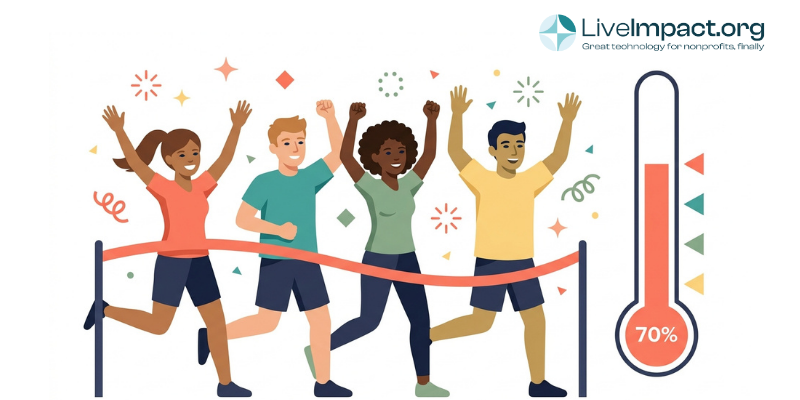
In a peer-to-peer campaign, your organization sets up a central fundraising page with an overall goal. Individual supporters then create their own personal pages underneath that central campaign, each with a personal story, a photo, and an individual target fundraising goal. They share those pages directly with friends, family, and coworkers to get the word out.
Every gift made through a personal page rolls up into your organization’s total. Your development team gets a live leaderboard of top fundraisers and teams, and your donor database ideally records every gift the same way it would from a direct online donation page.
The mechanics are simple, and the process is fun for all participants. What sets peer-to-peer fundraising apart from a typical online campaign is who is doing the asking. A direct mail letter or an email blast comes from your nonprofit. A peer-to-peer ask comes from someone the recipient already knows.
Why peer-to-peer fundraising matters right now
Traditional fundraising has been losing ground for years now. Participation in charitable giving fell 3% in 2025, and the long-term trend is even worse. Just under half of U.S. households gave to charity in 2018, down nearly 17 percentage points from 2000, according to research from GivingTuesday. Yet GivingTuesday’s own analysis points to tens of billions of dollars in fundraising potential that nonprofits simply are not capturing.
That gap has less to do with fading generosity, and more to do with how people decide to give. Donors have grown skeptical of institutional appeals and less responsive to messages that come directly from a brand. They respond to causes brought to them by people they already trust, which is exactly where peer-to-peer fundraising thrives.
The usage data reflects some volatility here too. Nonprofit Tech for Good’s 2026 report found that 32% of nonprofits currently use peer-to-peer fundraising, down from 45% in 2023. Organizations that stick with the format and test it properly tend to see it pay off over time. Others try it once, get a subpar response because they weren’t equipped with the right tools, and let it drop.
What to look for in peer-to-peer fundraising software
The features that matter most for peer-to-peer fundraising software come down to a short list.
- Customizable fundraising pages. Supporters should be able to add their own photo, story, and goal, importantly without a time commitment from your own staff.
- Built-in social sharing. One-click sharing to email, text, and social platforms drives the traffic each personal page gets.
- Team and individual fundraising options. Some campaigns work best with individual fundraisers. Others need team structures for workplace groups, family teams, or school groups.
- CRM integration. Every gift raised through a personal page should land in the same donor record as every other gift your organization receives without manual reconciliation.
- Mobile-friendly donation flow. Most gifts through personal pages come in from a phone, often clicked from a text message or social post.
- Real-time leaderboards. Visible progress and friendly competition are two of the biggest drivers of fundraiser engagement mid-campaign.
- Reporting tied to your main donor database. You need to see which fundraisers are converting new donors, not only which ones raised the most money.
If you are also weighing fundraising CRM options while you evaluate peer-to-peer tools, our Bloomerang alternatives guide compares seven donor management platforms on CRM depth and integration. It is worth a look before you commit to a peer-to-peer fundraising tool that lives outside your donor database.
Common use cases for peer-to-peer campaigns
Peer-to-peer fundraising shows up most often in a handful of formats.
- Walk-a-thons, runs, and rides. Participants register, set a personal goal, and recruit their own sponsors ahead of the event.
- Giving days. A single day of concentrated peer asks. This is often timed to an anniversary or a matching gift window.
- Birthday and tribute fundraisers. Supporters ask friends to give to your cause instead of buying a gift, often through built-in social media sharing tools.
- Staff and board-led campaigns. Internal teams fundraise among their own networks, which also tends to deepen board engagement with fundraising goals.
Many of these campaigns overlap with a broader event. If you are also running a gala, auction, or fun run alongside your peer-to-peer push, our guide to nonprofit event management software and our breakdown of nonprofit auction software cover the event side of the equation.
Standalone peer-to-peer tools vs. an all-in-one platform
Most peer-to-peer fundraising platforms were built to do one thing well: run the peer-to-peer campaign. That focus is great during the campaign itself, but it creates issues afterward. Gifts raised through a standalone peer-to-peer tool typically land in that tool’s own database first, which means someone on your team has to export the data and manually match it against your existing donor records to avoid duplicate entries.
For a small campaign, that might be a minor annoyance. For an organization running significant peer-to-peer fundraising every year, the mismatched data adds up. A donor who fundraises for your walk-a-thon and also gives monthly might show up as two separate people in two separate systems, which makes it harder to steward that relationship well.
Platforms built for nonprofits sometimes fold peer-to-peer tools into the same system as fundraising and donor management, so a gift raised through a personal fundraising page lands in the same record as every other gift that donor has made. LiveImpact takes this approach, tying peer-to-peer donations to the same donor record that already holds recurring gifts and event history, with program and case management available in the same system for organizations that run direct-service work alongside fundraising.
Whether a standalone tool or a connected system makes more sense for your organization depends on how central peer-to-peer fundraising is to your overall strategy, and how much reconciliation work your team can absorb every time a campaign wraps up.
How to choose the right peer-to-peer fundraising software for your organization
A few steps make the decision easier.
- Map your campaign calendar first. If you are running one small peer-to-peer fundraiser a year, a lighter standalone tool may cover your needs. If you are running several large campaigns across different programs, integration with your donor database becomes more important.
- List your must-have features against the criteria above, then request demos from two or three vendors to see the software in action.
- Ask each vendor directly how gift data moves from a personal fundraising page into your donor record.
- Check what happens to fundraiser and donor data if you switch platforms later. Exportable, standard-format data protects your organization from getting locked into a tool that no longer fits.
- Use a resource like NTEN’s Tech Accelerate assessment if your organization wants a structured way to weigh a new fundraising tool against your existing technology stack before you commit.
Frequently asked questions
How does peer-to-peer fundraising work?
Supporters create personal fundraising pages under your organization’s central campaign, then share those pages with their own networks through email, text, and social media. Every gift made through a personal page counts toward both that fundraiser’s individual goal and your nonprofit’s overall campaign total.
What’s the difference between peer-to-peer fundraising and crowdfunding?
Crowdfunding usually centers on a single campaign page that your organization manages directly, asking a broad audience of strangers to give toward one goal. Peer-to-peer fundraising puts the asking in your supporters’ hands, with each one running a personal page inside your larger campaign.
Does peer-to-peer fundraising software need to integrate with my CRM?
Integration is optional in theory, but it matters in practice. Without it, gift and contact data collected through personal fundraising pages sits in a separate system, and your team has to manually match it against existing donor records to avoid duplicates and missed giving history.
How much does peer-to-peer fundraising software cost?
Pricing varies by structure. Some peer-to-peer tools charge a flat monthly or annual subscription, some charge a percentage of funds raised, and platforms built into a broader nonprofit CRM may include peer-to-peer fundraising as part of a flat-rate package. Request pricing directly from vendors rather than relying on advertised starting rates, since fees often depend on transaction volume.
Finding the right fit
Peer-to-peer fundraising works best when the software gets out of the way and lets your supporters tell their own story. Look for a platform that makes it easy for fundraisers to set up a page in minutes, keeps gift data connected to the rest of your donor records, and gives your team the reporting needed to steward new donors after the campaign ends.
If you want to see how LiveImpact keeps peer-to-peer campaigns tied to the rest of your donor data instead of living in a separate system, you can request a demo and walk through it with your own campaign in mind.