

Why Your Choice of Nonprofit Auction Software Directly Impacts Fundraising Success
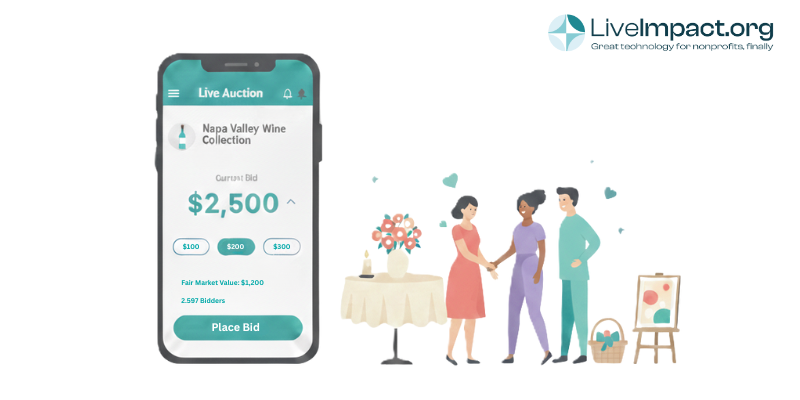
Nonprofit auction software powers everything from planning and item cataloging to bidding and final payment processing. These platforms manage silent auctions, live events, mobile bidding, virtual galas, and hybrid formats that blend in-person and online participation.
Your software choice affects revenue, donor experience, staff workload, and data quality. Strong platforms help you raise more through timely bid notifications and seamless mobile experiences. They reduce manual work during item setup, guest check-in, and payment processing. They capture clean data that informs future auction strategy and donor follow-up.
Poor platform choices create real problems. Bidders get confused during checkout. Payments fail or get delayed. Staff spend hours reconciling records after the event. Donor information sits isolated from your main CRM, making follow-up harder.
The best nonprofit auction software connects to your broader fundraising systems. Auction activity becomes part of each supporter’s complete record, not a standalone event. At LiveImpact, we built our auction tools directly into our donor management platform so every bid, purchase, and interaction strengthens your relationship data.
Define Your Auction Strategy Before Comparing Software Options
Start by clarifying what you want to accomplish. Your primary goal might be maximizing revenue, engaging new donors, stewarding major supporters, testing virtual formats, or building better data about attendee behavior. Each goal requires different software capabilities.
Match your format decisions to those goals. You might choose silent auctions with mobile bidding for broader participation, live auctions with paddle bidding for competitive major gifts, virtual livestream segments for remote supporters, or hybrid events that combine everything. Some organizations add buy-now items, raffles, or peer-to-peer fundraising components.
Consider your different audience segments. Major donors might expect white-glove service and clear paddle numbers. Younger supporters want everything on their phones. Board members may appreciate early access or VIP packages. Remote participants need reliable livestreams and simple digital checkout.
Be realistic about your team’s capacity. How comfortable are you with new technology? How much time can you dedicate to setup and training? Would you prefer high automation that handles routine tasks, or manual control over every detail? Your honest answers will guide which features matter most.
Core Features Every Nonprofit Auction Platform Should Provide
Once you know your strategy, evaluate platforms based on specific capabilities. On the item management side, you need tools to enter items quickly, upload multiple photos, record fair market value, set age restrictions or other limits, assign categories, create bundled packages, and track which donors contributed which items.
For bidding and payments, essential features include:
- Mobile bidding that works smoothly on any device
- Support for maximum proxy bids and custom bid increments
- Buy-now options for instant purchases without bidding
- Secure credit card and digital wallet payment processing
- Automated payment receipts that reduce manual work
The guest experience determines whether bidders find your event enjoyable or frustrating. Look for branded event pages that match your organization’s identity, simple online registration, fast check-in processes, seating and table assignments, paddle number management, and timely text alerts about bid status and event updates. If you plan virtual or hybrid events, reliable livestream integration becomes critical.
Reporting and analytics extend value far beyond event night. Real-time dashboards show you what’s working during the auction. Item performance reports reveal which packages generated the most interest. Bidder activity summaries identify your most engaged supporters. Revenue breakdowns help you understand where money came from and what to repeat next year.
Connect Auction Data to Your Donor Management System for Long-Term Impact
An auction generates valuable donor intelligence. That data should flow directly into your main CRM so each supporter has one unified record. Integration means bidder profiles, giving history, pledges, and event attendance all live together instead of across disconnected spreadsheets.
Strong integration makes donor stewardship automatic and personal. The software can trigger thank-you emails and letters, send pledge reminders, and create follow-up tasks for development staff. A first-time bidder might enter a welcome series. A long-time supporter might warrant a personal call from your executive director.
Program reporting also improves when auction software connects to your CRM. You can show your board and funders exactly how auction proceeds support specific programs. That transparency builds confidence and informs future planning.
According to research on nonprofit technology adoption from NTEN, organizations using integrated systems report spending 40% less time on data entry and reconciliation compared to those managing multiple disconnected tools. That time savings translates directly to more hours for donor relationships and program delivery.
LiveImpact combines auctions, donor management, campaigns, volunteer coordination, and reporting in one secure platform. Your auction becomes part of ongoing supporter relationships rather than isolated transactions.
Evaluate User Experience, Support Quality, and True Total Cost
Auctions can fail if the software frustrates users. Examine interfaces from three perspectives: staff who set up items and run reports, volunteers who manage check-in and checkout, and bidders who browse items and place bids. Good training resources, responsive onboarding support, and clear documentation help everyone succeed.
Implementation timelines matter for event planning. How long does configuration take? What testing period do you need? Will you have live chat or phone support during your event if technical issues arise? Having a contingency plan for Wi-Fi problems or payment delays reduces stress considerably.
Look beyond the base subscription price when comparing costs. Consider these factors:
- Flat annual fees versus per-event or per-bidder pricing
- Payment processing fees (usually 1.99% to 3.5% of transactions)
- Add-on charges for text messaging, livestream features, or premium support
- Setup fees or onboarding costs
- Export fees if you ever want to move your data
Calculate how these elements affect your net revenue. A platform that charges $500 per event plus 3% processing might cost more than a $3,000 annual flat fee, depending on your event frequency and size.
Standalone Auction Tools Versus Integrated Nonprofit CRM Platforms
Standalone auction tools focus exclusively on event management. They often provide straightforward setup, event-specific features, and competitive pricing for occasional use. Small organizations running one auction per year might find this approach sufficient.
The tradeoffs become clear over time. Exporting data from your auction tool and importing it to your donor database takes hours and introduces errors. Donor histories fragment across systems. Your communications lack context because email tools, event platforms, and giving records don’t talk to each other. Finance teams spend extra time reconciling event income with accounting records.
An integrated platform like LiveImpact maintains unified donor profiles where auction activity appears alongside annual gifts, pledges, volunteer hours, and engagement history. You can segment communications based on auction behavior, sending different messages to first-time bidders, frequent participants, or corporate sponsors.
This unified view simplifies board reporting. Auction performance appears alongside campaign results, fundraising goals, and program outcomes in one place. You can answer questions like “How many auction bidders became monthly donors?” or “What percentage of our major donors attended the gala?” without manual data matching.
Build Your Shortlist and Make a Confident Final Decision
Gather requirements from across your organization before building a shortlist. Include perspectives from development staff who manage donor relationships, event planners who coordinate logistics, finance team members who handle reconciliation, and IT staff who manage integrations. Prioritize features that are truly essential versus nice-to-have additions.
When speaking with vendors, ask these critical questions:
- Who owns our data, and how easily can we export it if we change platforms?
- What integrations do you support with accounting, email, and CRM systems?
- How do you handle security, donor privacy, and PCI compliance?
- What uptime guarantees and support response times do you provide?
- What happens to pricing if our event grows or we add more bidders?
Request demos that mirror real scenarios. Set up actual items from your inventory. Run test bids using realistic dollar amounts. Simulate check-in and checkout processes. Try both staff admin views and bidder experiences on different devices. Invite volunteers and board members to participate and share honest feedback about usability.
Make your final decision based on alignment with long-term fundraising strategy, compatibility with existing technology, vendor reputation and support quality, and expected impact on both net revenue and staff workload. The platform that looks cheapest upfront may cost more in hidden fees, staff time, and missed donor engagement opportunities.
Transform Every Auction Into a Relationship-Building Opportunity
The best nonprofit auction software does more than power a successful evening. These platforms turn casual bidders into committed long-term supporters by connecting event experiences to year-round engagement strategies.
Plan how each interaction leads into ongoing donor journeys. A first-time bidder receives welcome communications. A repeat participant gets invited to join your monthly giving program. A major item purchaser merits personal outreach about planned giving opportunities. Integrated systems like LiveImpact make these connections automatic because auction activity lives alongside your complete donor records.
Your auction software should support your mission for years, not just one event. When bidding data, payment history, and engagement metrics flow into your CRM, you build a complete picture of each supporter. That intelligence drives smarter cultivation, more personalized stewardship, and stronger relationships that increase lifetime donor value.
Ready to simplify your next auction and raise more for your mission? LiveImpact’s nonprofit auction software streamlines setup, bidding, payments, and reporting so you can focus on your supporters. Reach out to our team to explore how we can tailor the platform to your goals and help you build stronger donor relationships through every auction.