

Most nonprofits put off switching software for months, sometimes years, because the prospect of losing data, disrupting operations, or spending half a year in implementation limbo feels too risky. That concern is reasonable. A poorly managed migration can be a real headache. A well-planned one, however, can be a more predictable and positive experience than most nonprofit directors expect. This guide walks through what nonprofit software migration actually involves, how to prepare your organization before you start, and what to ask any vendor before signing.
What nonprofit software migration actually involves
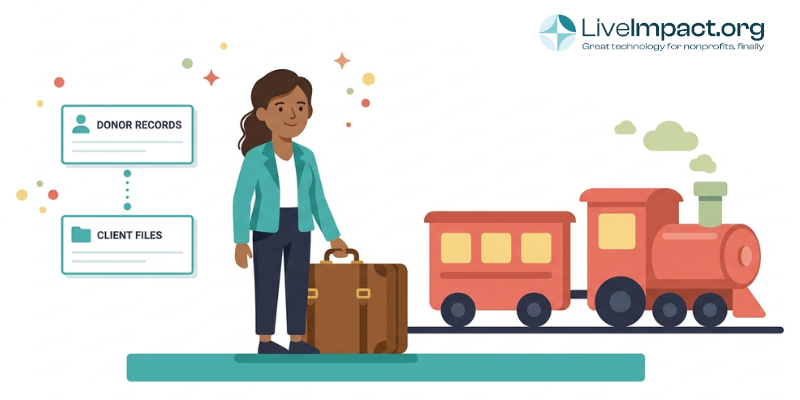
Migration means moving your existing data (client records, donor history, grant information, program notes) into a new system, then configuring that system to match how your organization actually works. Most nonprofit migrations follow three phases: preparation, data transfer, and go-live.
During the preparation phase, you and your vendor audit what data exists, decide what to bring over, and map your old system’s fields to your new one’s structure. The data transfer phase is when your cleaned, organized records are imported and validated in the new system. Go-live is when staff switch to the new platform, usually after a parallel period where both systems run simultaneously so your team can verify everything transferred correctly before fully cutting over.
How long does nonprofit software migration take?
For most small-to-mid-sized nonprofits, a full migration runs four to eight weeks from contract signing to go-live. Simpler single-module implementations can move faster. More complex setups with multiple program areas, large donor databases, or extensive custom fields take longer.
The factors that stretch timelines most reliably are data volume, data quality, number of modules being configured, and staff availability for training and review. The biggest variable in most migrations is data readiness on the nonprofit’s side, not the vendor’s setup time. Organizations that start a migration with clean, organized data consistently go live faster than those that don’t.
What to do before you start a migration
The preparation phase is where migrations succeed or fail. Getting ahead of these steps before your vendor starts work pays off on the other side.
- Audit your current data. Take stock of what’s actually in your existing system. Duplicate records, incomplete fields, contacts that haven’t been touched in five years, closed cases that are still flagged as active. All of this slows down a migration. Cleaning data before you export is considerably easier than cleaning it after you import.
- Decide what to migrate. Organizations often discover they need to bring over far less than they assumed. Historical data from programs that no longer exist, lapsed donors from a decade ago, closed cases with no ongoing relevance. Define your cutoff dates and data sets before the migration begins. Moving only what you need keeps the new system clean from day one.
- Map your data fields. Your current system’s field names almost certainly don’t match the new system’s. Getting clear on how data translates from one structure to the other before migration starts prevents gaps and mismatches on arrival. Your vendor should walk you through this, but you’ll need someone who knows your data to participate in the conversation.
- Involve the right staff early. The people who use the system daily know where the data quirks live. The donor who has two records. The program that tracks something in a field it technically shouldn’t. Pull a program director or case manager into the conversation before the migration starts, not after.
If you’re in the early stages of evaluating what a switch might cost your organization, the breakdown of upfront and hidden software implementation costs for nonprofits covers the financial side in detail.
What to ask your vendor before migrating
These questions belong in any vendor conversation before you sign. The answers reveal a lot about how organized the process will be and where you might hit friction.
- What data formats do you accept for import?
- Is data migration included in onboarding, or billed separately?
- Who does the actual migration work (your team or ours)?
- What happens if data is missing or corrupted during transfer?
- Will we have a parallel period where both systems run simultaneously?
- What does training look like after go-live?
LiveImpact includes data migration as part of its standard onboarding process, handled by nonprofit implementation specialists. For a fuller picture of what software costs typically look like across the sector, nonprofit CRM pricing is worth a read before you finalize any contract. The Nonprofit Technology Network (NTEN) also publishes periodic research on nonprofit technology adoption that’s useful for benchmarking implementation expectations.
Common reasons nonprofit migrations go sideways
Dirty data going in. Garbage in, garbage out. Migrations that skip a data audit tend to produce duplicate records and missing fields on the other side. Running a data cleanup process before migration is less work than untangling a messy import after go-live.
Underestimating internal staff time. Migration is a shared project, not a vendor-only deliverable. Staff need to review imports, complete training, run parallel processes during go-live, and approve data before the switch is final. Organizations that treat migration as something happening to them, rather than with them, consistently struggle more than those that assign clear internal ownership from the start.
Scoping only for today’s needs. If you’re switching to a platform that can grow with you (adding grant management, donor tools, or additional program modules down the road), tell the vendor upfront. Configuring the initial setup to support future modules is considerably easier than retrofitting later. The implementation experience comparing Salesforce and LiveImpact touches on how scoping decisions made early shape what’s possible later.
What a smooth migration looks like
When a nonprofit migration goes well, staff are trained before the go-live date, not scrambling to learn a new system on the first day it’s live. Historical data is accessible in the new system and validated before anyone cuts over from the old one. The platform is configured around actual workflows rather than forcing staff to adapt to generic templates. And there’s a clear, named support channel for the first 60 to 90 days, when questions come up most frequently.
Nonprofits running nonprofit case management software alongside donor management and grant tracking particularly benefit from migrations that handle those program records carefully. Client files, service histories, and outcome data are often more complex to map than donor records, so organizations running program services should make sure their vendor has experience with that data type specifically. If you’re ready to see what a well-structured migration process looks like in practice, schedule a demo to walk through how LiveImpact approaches onboarding.
Frequently asked questions about nonprofit software migration
How much does nonprofit software migration cost?
Migration costs vary by vendor and scope. Some platforms include migration as part of their onboarding fee, while others charge it separately. Costs typically range from a few hundred dollars for simple imports to several thousand for complex multi-module implementations. Always confirm whether data migration is included in the quoted onboarding price before signing. TechSoup offers a range of nonprofit technology resources, including guidance on evaluating vendor contracts, that can be useful during this process.
Can we keep using our old system during migration?
Most vendors support a parallel period where both systems run simultaneously, letting your team verify data accuracy before fully switching over. Ask your vendor how long the parallel period lasts and whether it carries any additional cost.
What data can be migrated to a new nonprofit platform?
Most platforms can accept donor records, client files, contact history, program data, and financial records if exported in standard formats like CSV or Excel. How completely that data transfers depends on how your current system exports it and how well the fields map to the new system’s structure.
How do we handle historical data we don’t want to lose?
Work with your vendor to define which records to migrate and which to archive. Many nonprofits migrate only active records and recent history, keeping older data accessible in a read-only export rather than carrying it into the new system where it creates clutter.
What if something goes wrong during migration?
Reputable vendors run data validation checks after import to flag missing or mismatched records before go-live. Ask your vendor what their error-handling process looks like and whether you’ll have an opportunity to review and approve the import before the system goes live.