

I’ll be honest: the first time I heard about GivingTuesday, I thought it was just another social media hashtag that would fade away. But after watching nonprofits of all sizes use this day to connect with donors, rally their communities, and hit real fundraising goals, I became a believer. GivingTuesday delivers real results for organizations that show up prepared.
The challenge? Making sure you’re ready for it. GivingTuesday can generate serious momentum and donations, but it requires planning, the right tools, and a clear strategy. This guide will walk you through everything you need to know about GivingTuesday 2025, from the basics to actionable ideas you can actually implement.
What Is GivingTuesday?
GivingTuesday is a global day of giving that happens every year on the Tuesday after Thanksgiving. It started in 2012 as a response to Black Friday and Cyber Monday, shifting the focus from consumerism to generosity. The idea was simple: encourage people to do good and give back to causes they care about.
What started as a social media movement has grown into something much bigger. Today, GivingTuesday spans over 90 countries and has raised more than $18.5 billion for nonprofits since it began. In 2024 alone, nonprofits in the United States raised $3.6 billion in a single day. That’s not a typo. Billions with a B.
GivingTuesday creates real momentum for nonprofits. Donors actively search for ways to give on this day, which means your organization has a unique opportunity to reach new supporters, re-engage lapsed donors, and kick off your year-end fundraising with serious energy.
When Is GivingTuesday 2025?
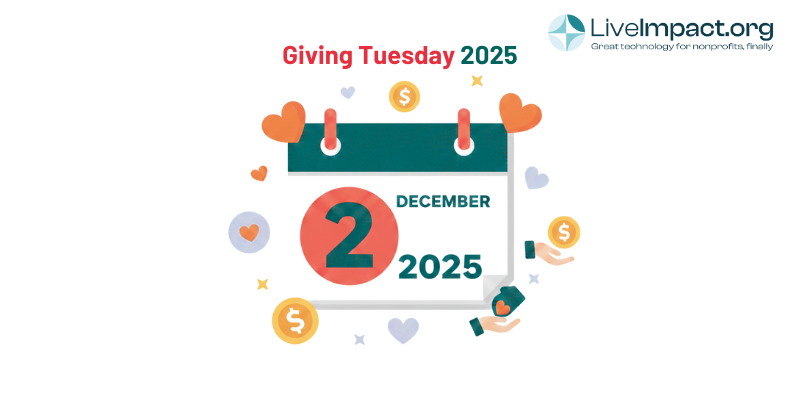
Mark your calendar: GivingTuesday 2025 is Tuesday, December 2, 2025.
If you’re reading this in late November, you still have time to put together a solid campaign. While many nonprofits start planning months in advance, you can still create an effective GivingTuesday strategy in the time you have left. The key is focusing on what matters most and executing well.
Think of GivingTuesday as the starting gun for year-end fundraising. December is when charitable giving peaks, and GivingTuesday gives you the perfect opportunity to set the tone for the entire month.
Why GivingTuesday Matters for Nonprofits
GivingTuesday offers something valuable beyond the obvious fundraising boost: visibility. Donors are actively searching for organizations to support, which means smaller nonprofits and grassroots campaigns can get noticed alongside national organizations.
GivingTuesday also helps you reconnect with supporters who may have drifted away. That donor who gave two years ago but hasn’t been active lately? GivingTuesday gives you a natural reason to reach out and invite them back into your community.
And here’s something that often gets overlooked: GivingTuesday donors are more likely to give again before the year ends. Data shows that donors acquired on GivingTuesday have retention rates that are 38% higher than donors acquired earlier in the year. You’re building longer relationships, not just getting one-time gifts.
Planning Your GivingTuesday Campaign: What to Do Right Now
Whether you’re starting from scratch or refining an existing plan, here’s what you need to focus on in the final days before GivingTuesday:
This Week: Get the Essentials in Place
- Choose a simple, clear campaign message that connects to your mission
- Set a specific fundraising goal you can promote
- Reach out to potential matching gift sponsors (board members, major donors, local businesses)
- Make sure your donation page works smoothly on mobile devices
- Draft your main email and social media content
Next Week: Build Your Content
- Create graphics and social media posts for the campaign
- Write your email sequence (pre-campaign teaser, day-of appeals, and thank-you messages)
- Record a short video explaining what you’re raising money for and why it matters
- Test your donation page thoroughly to catch any broken links or issues
- Line up volunteers who can help share your message or make thank-you calls
The Week of GivingTuesday: Execute and Engage
- Send reminder emails to your donor list in the days before December 2nd
- Post daily social media teasers building excitement
- Reach out personally to major donors and board members
- Prepare real-time content you can share throughout the day (photos, updates, donor stories)
- Set up a simple system to track donations as they come in
December 2nd: Stay Active All Day
- Launch your campaign first thing in the morning
- Post regular updates throughout the day
- Thank donors publicly on social media and personally via email or phone
- Share milestones as you hit them (“We just reached $5,000!”)
- Keep energy high with live updates and real-time stories
After GivingTuesday: Follow Up Fast
- Send personalized thank-you messages within 24-48 hours
- Analyze your campaign data to see what worked
- Keep the conversation going into year-end fundraising
- Start a running list of what to improve for next year
The nonprofits that stay organized and execute consistently are the ones that see the biggest results. Even with limited time, you can run a successful campaign by focusing on the fundamentals.
12 GivingTuesday Fundraising Ideas That Actually Work
Let’s get practical. Here are proven fundraising strategies you can use for your GivingTuesday campaign:
1. Launch a Matching Gift Challenge
Matching gifts are one of the most effective ways to motivate donors. When people know their donation will be doubled, they’re more likely to give and often give more generously. Partner with a board member, major donor, or local business to create a matching gift pool. Then promote it heavily: “Every dollar you give today will be matched, doubling your impact.”
2. Create a Peer-to-Peer Fundraising Campaign
Empower your supporters to fundraise on your behalf. Give them the tools to set up personal fundraising pages, share their connection to your mission, and invite their networks to give. Peer-to-peer campaigns expand your reach exponentially because you’re tapping into networks you wouldn’t otherwise access.
3. Optimize Your Donation Page
This sounds basic, but it matters. Your donation page needs to load fast, work perfectly on mobile, and make giving as easy as possible. Include clear explanations of how donations will be used, compelling visuals, and suggested donation amounts. Test the entire process yourself before GivingTuesday to catch any issues.
4. Go Live on Social Media
Use Instagram Live, Facebook Live, or another platform to connect with supporters in real time. Share behind-the-scenes looks at your work, interview clients or beneficiaries, and give live updates on your campaign progress. Live video creates urgency and makes donors feel like they’re part of something happening right now.
5. Send Strategic Email Campaigns
Email remains one of the most effective fundraising channels. Send a series of emails leading up to GivingTuesday, then multiple touchpoints on the day itself. Segment your list so first-time donors get different messaging than longtime supporters. Personalize whenever possible, and always include a clear call to action.
6. Tell Specific, Concrete Stories
Don’t just ask for donations. Show donors exactly what their money will do. Instead of saying “Help us serve more families,” say “Your $50 donation provides a week of groceries for a family in need.” Specific, tangible impacts motivate giving far more than general appeals.
7. Host a Virtual Fundraising Event
Bring people together online for a livestreamed event. This could be a panel discussion, a cooking demonstration, a concert, or anything that connects to your mission. Incorporate real-time donation opportunities and make it interactive so supporters feel engaged.
8. Recruit Volunteers to Make Thank-You Calls
Personal touches matter. Organize a group of volunteers to call or text donors throughout the day to thank them. Even a quick “We got your donation and we’re so grateful” message makes people feel valued and increases the likelihood they’ll give again.
9. Create Urgency with Time-Limited Offers
Use countdown timers, hourly challenges, or limited matching gift windows to create urgency. For example: “In the next hour, all donations up to $5,000 will be matched.” This gives donors a reason to act immediately instead of putting it off.
10. Ask for Non-Monetary Support Too
Not everyone can donate money, but they might be able to volunteer, share your posts, or donate needed supplies. Make it easy for people to support your mission in different ways. This broadens participation and builds community.
11. Share Real-Time Updates Throughout the Day
Keep momentum going by posting regular updates. Share milestones: “We just hit $5,000!” Share donor stories: “Meet Sarah, who’s been supporting our work for 10 years.” Share photos and videos from your team. Constant activity keeps your campaign top of mind.
12. Connect GivingTuesday to Year-End Giving
Don’t treat GivingTuesday as a standalone event. Use it as a launchpad for your entire year-end fundraising push. In follow-up communications, remind donors that December is your most important fundraising month and invite them to give again before the year ends.
Best Practices for GivingTuesday Success
Beyond specific tactics, here are the principles that separate successful campaigns from mediocre ones:
Start with Clear Goals Know exactly what you’re trying to accomplish. Set specific targets for total dollars raised, number of donors, new donor acquisition, and social media engagement. Clear goals help you make better decisions and give your team something concrete to rally around.
Use Multi-Channel Outreach Don’t rely on just email or just social media. Use email, social media, text messages, direct mail, phone calls, and your website. Different supporters prefer different channels, and repetition across platforms reinforces your message.
Segment Your Audience Not every donor should get the same message. First-time donors need more context about your work. Long-time supporters want to hear about the impact they’ve already made. Major donors deserve personal outreach. Tailor your communications to different segments.
Make Giving Easy Remove every possible barrier. Your donation form should be simple, mobile-friendly, and fast. Accept multiple payment methods including credit cards, PayPal, Venmo, and ACH transfers. The easier you make it, the more people will follow through.
Thank Donors Immediately and Personally Gratitude matters deeply. Send an automated confirmation email right away, then follow up with more personal thanks within 24-48 hours. Call major donors. Send handwritten notes to first-time supporters. Make people feel valued, not like transaction numbers.
Track Everything Pay attention to what’s working in real time. Which emails have the highest open rates? Which social posts are getting the most engagement? What time of day are people giving? Use this data to adjust your approach during the campaign and to improve future efforts.
How Technology Transforms Your GivingTuesday Campaign
Here’s where I need to be direct: the tools you use matter. A lot.
I’ve seen nonprofits run GivingTuesday campaigns using manual processes, disconnected systems, and outdated donation pages. Staff spend the entire day fighting with technology instead of engaging with donors. Data gets lost. Opportunities slip away.
The nonprofits that succeed use modern fundraising platforms built specifically for this kind of work. They have donation pages that load instantly on mobile. Their email systems automatically segment audiences and personalize messages. Their donor data flows into one central system so nothing falls through the cracks.
This is where platforms like LiveImpact make a measurable difference. When your donation page, email marketing, donor management, and reporting all work together seamlessly, your team can focus on strategy and relationships instead of data entry and troubleshooting.
Think about it: Would you rather spend GivingTuesday manually updating spreadsheets, or would you rather spend it connecting with donors and sharing impact stories? The right technology doesn’t just save time. It fundamentally changes what your team is capable of accomplishing.
Following Up After GivingTuesday
The campaign doesn’t end when December 2nd is over. What you do in the days and weeks after GivingTuesday determines whether those new donors become long-term supporters.
Send Thank-You Messages Within 48 Hours Don’t wait. Send personalized thank-you emails, make phone calls to significant donors, and acknowledge first-time supporters individually. Speed matters because it shows you value their gift.
Analyze Your Data Look at the numbers. How many donors were new versus returning? Which channels drove the most donations? What messages resonated? Use this information to improve your year-end fundraising and next year’s GivingTuesday campaign.
Keep the Conversation Going Don’t go silent after GivingTuesday. Send updates about how you’re using the funds raised. Share success stories. Invite donors to get involved in other ways. Build relationships through consistent communication.
Connect to Year-End Giving Use GivingTuesday momentum to fuel the rest of December. Remind donors that December 31st is the last chance to make tax-deductible donations for the year. Many of your GivingTuesday donors will give again if you invite them.
Common GivingTuesday Mistakes to Avoid
Let me save you some pain by highlighting what doesn’t work:
Waiting Until the Last Minute Even if you’re short on time, waiting until December 1st to start planning is too late. Give yourself at least a few days to get organized.
Using Generic Messaging “Please donate” isn’t compelling. Tell specific stories, share concrete impact, and give people real reasons to care.
Ignoring Mobile Users More than half of your donors will give on their phones. If your donation page doesn’t work perfectly on mobile, you’re losing money.
Forgetting to Test Always test your donation form, email links, and website before launching. One broken link can cost you thousands of dollars.
Neglecting Follow-Up The relationship doesn’t end when someone donates. Follow-up determines whether they give again.
Final Thoughts
GivingTuesday works. I’ve seen it transform year-end fundraising for organizations of all sizes. But it only works if you plan strategically, execute consistently, and use tools that support your goals instead of creating more work.
The nonprofits that succeed on GivingTuesday are the ones that start early, tell compelling stories, make giving easy, and follow up with genuine gratitude. They treat GivingTuesday as an opportunity to invite people into their mission and build relationships that last.
Your mission is too important to leave GivingTuesday success to chance. Start planning now, get your tools in order, and give your team what they need to make December 2, 2025 your best fundraising day of the year.
Ready to transform your GivingTuesday results? See how LiveImpact’s all-in-one fundraising platform helps nonprofits run seamless campaigns, engage donors across channels, and turn one-time supporters into lifelong champions. [Request a demo today].
Frequently Asked Questions
Do nonprofits have to register to participate in GivingTuesday? No. Any 501(c)(3) nonprofit can participate without registering or paying fees. Just launch your campaign and start fundraising.
When should we start planning our GivingTuesday campaign? Ideally 6-8 weeks in advance, but even if you’re starting now in late November, you can still run a successful campaign. Focus on the essentials: clear messaging, a working donation page, and consistent communication with your supporters.
How much can we realistically raise on GivingTuesday? It varies widely based on your organization’s size and preparation. Small nonprofits might raise a few thousand dollars, while larger organizations can raise hundreds of thousands. The key is setting realistic goals and planning accordingly.
Should GivingTuesday be separate from our year-end campaign? No. Treat GivingTuesday as the kickoff to your year-end fundraising season. Use it to build momentum that carries through December 31st.
What if we have a small team and limited resources? You can still have a successful GivingTuesday campaign. Focus on a few key strategies like peer-to-peer fundraising, email marketing, and social media. The right technology can also help small teams accomplish more with less effort.