

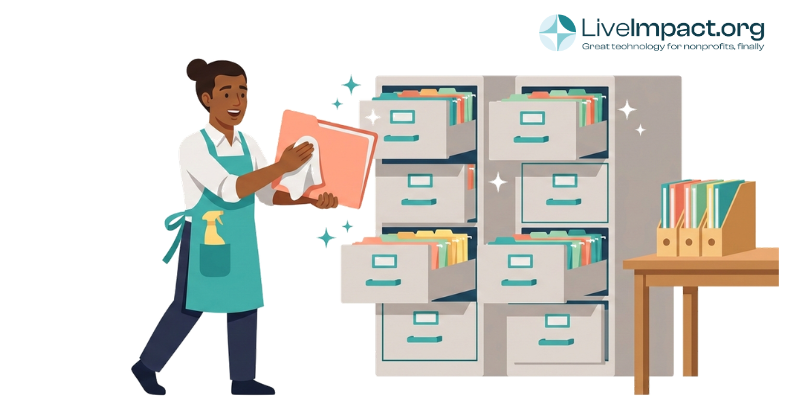
Cleaning up your nonprofit donor database with AI comes down to three things: fixing bad records, collapsing duplicates, and adding missing context. Most AI-enabled CRMs can handle all three without requiring a dedicated data team or technical expertise. You point the tools at your existing records, review the suggestions they surface, and approve the changes that make sense.
The harder part is usually getting started. Most development teams are working with data spread across spreadsheets, an event platform, an email tool, and whatever legacy system preceded the current CRM. That fragmentation is where errors multiply and duplicates pile up. The good news is you don’t have to clean everything at once. Picking one upcoming campaign segment as a starting point gives you a manageable scope and a clear way to measure whether the effort is working.
Why Does Donor Data Quality Matter So Much for Fundraising?
Clean data leads to better outcomes. When records are accurate and up-to-date, your fundraising plans start to work the way you hoped.
Strong data hygiene directly supports these development priorities:
- Higher email deliverability and fewer hard bounces
- Donor segments that allow you to target the right groups effectively
- LYBUNT and SYBUNT lists that actually match real giving history
- Seasonal campaigns that reach the right people at the right time
Accurate contact info and gift histories also build stronger donor retention. When addresses, salutations, and household links are correct, thank-you letters feel personal. You are less likely to send a renewal ask right after a donor upgraded, or forget to invite a loyal supporter to a special event.
Operations and program teams feel the benefits too. Less time hunting for correct addresses before a mailing. Smoother grant reporting, since data stays consistent across programs. Fewer last-minute edits before a board meeting packet goes out.
On the compliance side, clean data makes it easier to honor opt-outs, answer donor questions about their records, and produce reports for grantors or auditors. For nonprofits, time lost to data errors translates directly into fewer services, weaker campaigns, and more stress during busy seasons.
How Do You Use AI to Clean Donor Records?
Data cleaning means fixing records so they match real, current information. Practically, that looks like correcting spelling, standardizing address formats, and filling in missing or inconsistent fields so your CRM can actually support your plans.
AI can scan donor records at scale and surface patterns that are easy for humans to miss. A first name that looks like a common typo. A gift date that falls far outside a donor’s usual schedule. An address field that has shifted into the wrong column. AI flags these issues and suggests changes, while your team decides what to approve. A good CRM keeps an audit trail so you can always see who changed what and when.
Practical cleaning routines that work well for small development teams include:
- Quarterly reviews of mailing addresses before major seasonal campaigns
- Monthly checks on new online gifts for obvious data entry errors
- Seasonal list refreshes before galas or peer-to-peer campaigns
When AI-enabled tools are built into your CRM, these reviews become a normal part of using the system. Staff do not need to export files, run separate scripts, or learn new apps. They can accept or reject suggestions while updating records or building lists, which keeps the workload realistic.
How Do You Find and Merge Duplicate Donor Records?
Duplicates are one of the most common data headaches in nonprofit fundraising. The same supporter might appear as “Ann M. Lee” from an event sign-up, “Ann Lee” from an online gift, and “Ann Marie Lee” from a mailed reply card. It looks like three people. It is one.
Basic deduplication tools often match only exact fields like first name, last name, and email. AI can weigh several signals at the same time:
- Partial name matches and common abbreviations
- Shared mailing address or phone number
- Employer or organization name
- Similar giving patterns or event attendance history
This pattern matching surfaces likely duplicates that a simple search would miss. Once possible pairs are flagged, your merge policy matters. Before any large clean-up, it helps to agree on which record counts as primary, how to combine gift history and soft credits, how to preserve the most recent contact details, and how to handle differing communication preferences or notes.
Strong AI support should still include a human review step, especially for major donors, board members, and institutional funders. Staff can approve straightforward merges in bulk, then take a closer look at higher-risk records individually.
Good deduplication prevents double appeal letters, awkward double acknowledgments, and confusing reports. Everyone gets a single, trustworthy view of each donor’s connection with your organization.
What Is Donor Data Enrichment, and Is It Safe to Use?
Data enrichment means adding helpful context to records you already have so your outreach feels more relevant. The goal is making better use of what is already in your system, not collecting everything possible.
AI can surface useful signals from behavior your organization already tracks:
- Typical gift size and frequency
- How often someone opens or clicks emails
- Which campaigns or program areas get the most response
From those patterns, AI can suggest likely preferences, such as whether someone responds better to email than direct mail, or seems more engaged with a particular program. This kind of enrichment stays inside your existing relationship with the donor, building on data they already shared rather than pulling in broad consumer information that might feel intrusive.
Because enrichment touches trust, privacy carries real weight here. Strong practices include clear privacy notices written in plain language, easy ways for donors to update preferences or opt out, and respect for regulations like GDPR or applicable state privacy laws. A useful gut check for any AI use: “Would we feel comfortable explaining this to a donor?”
Used carefully, enrichment supports practical improvements like better suggested ask amounts, smarter timing for follow-up messages, and more accurate segmentation for seasonal appeals.
How Do You Keep AI-Powered Data Practices Compliant?
Good data hygiene and good compliance go together naturally. The same steps that clean up records also make it easier to meet legal and ethical obligations.
Key areas to monitor on an ongoing basis:
- Consent tracking for email, text, and other outreach channels
- Honoring opt-out requests quickly and completely
- Data retention policies and when to archive or delete records
- Secure storage and limited staff access to sensitive fields
AI features should sit inside those boundaries. An AI-enabled CRM should respect existing consent flags, avoid suggesting outreach that conflicts with a donor’s stated choices, and log automated updates for accountability. Smart support should strengthen your controls.
Aligning development, programs, and whoever handles data governance around simple written guidelines helps avoid confusion. Those guidelines can cover what data you collect, why you collect it, how long you keep it, and how AI is permitted to use it. Common frameworks like PCI DSS for payment data and GDPR-style data minimization principles offer practical models even if your organization is not legally bound by every detail. A brief annual review during winter planning can confirm that system settings and team habits still match your policies.
Where Do You Start With AI Data Hygiene Before a Campaign?
Pick one upcoming fundraising moment and treat it as a pilot. A spring appeal, summer event, or early fall campaign all work well. There is no need to clean everything at once.
A simple phased approach:
- Clean contact data and basic fields for everyone in the campaign segment
- Deduplicate key groups like recurring givers and major donor prospects
- Test one or two enrichment features that directly support your goal, such as ask suggestions or engagement scores
Track a few clear metrics as you go: email deliverability, bounce rates, response rates on reactivation lists, or staff hours spent preparing lists compared to past campaigns. Those numbers build momentum and make the case for keeping up the habits.
A unified AI-enabled CRM like LiveImpact lets you manage all of these steps in one place rather than juggling loosely connected tools. Development and program teams share the same accurate donor records, which reduces confusion and conflicting reports across the organization.
Data hygiene works more like regular gardening than a one-time clean-out. Small, steady care over time protects your list, honors donor trust, and produces real results across the fundraising calendar.
Frequently Asked Questions
How often should a nonprofit clean its donor database? Most development teams benefit from light, ongoing maintenance rather than infrequent large projects. Monthly checks on new gift entries, quarterly address reviews before major mailings, and a fuller audit once or twice a year keep records in good shape without creating a separate workload.
Can small nonprofits with limited staff realistically use AI for data hygiene? Yes, especially when AI tools are built directly into the CRM your team already uses. The goal is to surface suggestions staff can accept or reject during their normal workflow, rather than adding a separate data management process that competes for time.
What is the difference between data cleaning and data enrichment? Cleaning fixes errors in records you already have, such as typos, duplicate entries, and missing fields. Enrichment adds helpful context to accurate records, such as engagement scores or likely communication preferences, so your outreach can be more relevant.
Is it safe to use AI with donor data under GDPR or state privacy laws? AI tools can be used responsibly with donor data when they operate within existing consent frameworks, respect opt-out requests, minimize data collection to what is necessary, and log changes for accountability. Organizations subject to GDPR or state privacy laws should review their CRM’s data processing agreements and confirm that any AI features align with their privacy policies.
What causes duplicate donor records in nonprofit CRMs? Duplicates most commonly appear when data enters the system through multiple channels, such as an event registration platform, an online giving page, a mailed reply card, and manual staff entry, without a consistent matching process at the point of entry. AI-assisted deduplication helps catch these after the fact, but building consistent data entry practices reduces new duplicates going forward.
Turn Your Donor Data Into Lasting Support
Ready to work smarter with every campaign? LiveImpact helps you personalize outreach, prioritize prospects, and uncover insights your team can act on today using AI for fundraising built directly into your CRM. Our team will walk you through setup, training, and best practices so your staff can focus on relationships rather than repetitive tasks. Reach out to explore what a tailored solution could look like for your organization.