

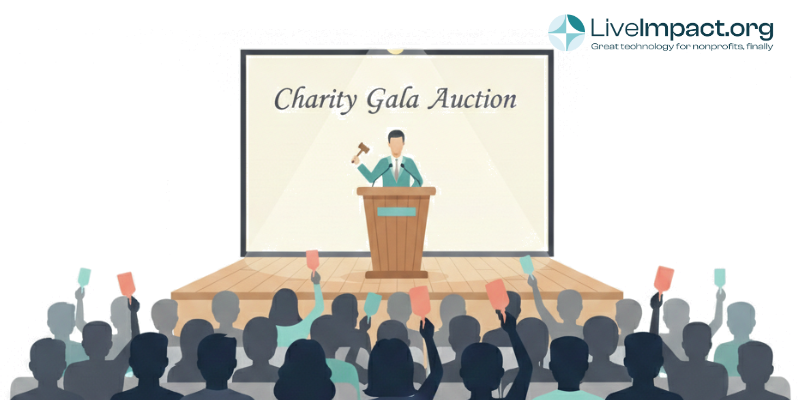
A well-run auction can raise tens of thousands of dollars in a single evening, with 77% of nonprofits reporting consistent revenue from this fundraising strategy, but a poorly planned one leaves money on the table and exhausts your team. The difference comes down to preparation and strategy.
This guide walks you through the complete nonprofit auction planning process, from setting goals and procuring items to engaging bidders and converting winners into long-term donors.
What is a silent auction and how does it work
Nonprofit auction planning starts with establishing clear financial goals, assembling a dedicated volunteer team, and launching item procurement early (ideally 10 to 12 months before your event). A silent auction is a fundraising format where items are displayed and guests place bids without a live auctioneer calling out prices. Bidding happens quietly through paper bid sheets or mobile devices, and the highest bid when the auction closes wins.
Unlike live auctions with their fast-paced energy, silent auctions let guests browse at their own pace. That makes them popular for galas and dinners where you want bidding to happen in the background while other programming takes place.
Here’s what makes up a typical silent auction: display tables or online catalog where items are showcased with descriptions and photos, bid sheets or mobile bidding for placing and tracking bids, minimum bid and bid increments that guide competitive bidding, and a silent close where bidding ends at a set time without verbal announcement.
Types of auction fundraisers for nonprofits
Before diving into planning steps, understanding which format fits your event saves time and maximizes results.
Silent auctions work well when you want guests to bid independently while enjoying other activities. They require less staff than live auctions and suit galas and community gatherings where bidding happens alongside socializing.
Live auctions with an auctioneer create excitement and competitive energy through a professional or volunteer auctioneer. Live auctions typically feature fewer items but can generate significant revenue per item when the room is engaged.
Online and virtual auctions open your auction to supporters who can’t attend in person. Extended bidding windows give more people time to participate, and you can reach donors across a wider geographic area.
Hybrid auctions combine in-person and online bidding simultaneously. This format has grown in popularity because it maximizes participation by letting guests in the room compete alongside remote bidders, though they require more coordination.
| Format | Best for | Bidder experience | Staff effort |
| Silent | Galas, multi-activity events | Self-paced browsing | Moderate |
| Live | High-value spotlight items | Exciting, competitive | High |
| Online | Remote supporters | Convenient, flexible | Low to moderate |
| Hybrid | Maximizing participation | Combined experience | Moderate to high |
Step 1. Set auction goals and create a budget
Every successful auction starts with clear objectives. Without defined targets, you won’t know whether your event succeeded or how to improve next time.
Define revenue and attendance targets
Set a specific fundraising goal based on your organization’s needs and past event performance. If this is your first auction, research what similar organizations in your area have raised. Your expected guest count directly affects venue size, item quantity, and staffing needs.
Identify expense categories
Building a realistic budget early prevents surprises later. Common auction expenses include:
- Venue rental and setup costs
- Catering and beverages for guests
- Auction software and mobile bidding platform fees
- Marketing materials and promotional costs
- Payment processing fees
- Printed materials like bid sheets, programs, and signage
- Staff or volunteer coordination expenses
Track every cost category so you can accurately calculate net revenue and understand your return on investment.
Pursue corporate sponsorships
Sponsors can offset significant costs while gaining visibility at your event. Consider offering logo placement on bid sheets, table signage, or naming rights for specific auction sections. Local businesses often respond well to clear sponsorship packages with defined benefits.
Step 2. Choose the right auction format for your event
Now that you’ve set goals and budget, match your format to your audience and resources. Consider your donors’ comfort with technology. A crowd that skews older might prefer traditional bid sheets, while younger supporters often expect mobile bidding.
Your venue matters too. A seated dinner works well with silent auction tables around the perimeter, while a cocktail-style event might benefit from mobile bidding that lets guests bid from anywhere in the space.
Step 3. Build your auction planning team
Auction planning involves procurement, marketing, logistics, and event-day execution. Trying to handle everything yourself leads to burnout and missed details. Divide responsibilities among dedicated volunteers or staff members who can own specific areas.
Key roles for your auction committee:
- Event chair: Overall coordination and decision-making across all committees
- Procurement lead: Secures donated items and corporate sponsorships
- Marketing coordinator: Handles promotion, communications, and social media
- Logistics manager: Oversees venue setup, registration, and checkout processes
- Volunteer coordinator: Recruits and trains event-day helpers
Establish a planning timeline
Starting 10 to 12 months out gives you time to secure a venue, begin item procurement, build momentum with marketing, and avoid last-minute scrambling. Create a project timeline with milestones for major tasks like venue booking (9-10 months out), procurement goals (6-8 months out), and marketing launch (3-4 months out).
Step 4. Procure high-value auction items
Your items drive bidding and revenue. The right mix attracts competitive bids, while poorly chosen items sit untouched and waste display space.
Experience and travel packages
Experiences consistently outperform physical goods at charity auctions. A weekend getaway, exclusive dinner with a local chef, or VIP access to a sold-out event creates emotional bidding that pushes totals higher. People bid more aggressively for memories than for objects.
Services and gift certificates
Spa packages, professional photography sessions, and restaurant gift cards are easy to procure from local businesses. They appeal to a broad audience and often have clear retail values that make pricing straightforward.
Unique products and collectibles
Signed memorabilia, original artwork, and limited-edition items attract collectors willing to bid aggressively. These work especially well in live auction formats where an auctioneer can build excitement around rare pieces.
Donated goods from local businesses
Approach local merchants with a clear ask and explain how you’ll recognize their contribution at the event and in marketing materials. Building community relationships benefits future events too. Many businesses appreciate the exposure and goodwill that comes from supporting local nonprofits.
Step 5. Price auction items to maximize bids
Smart pricing encourages participation while protecting your revenue. Price items too high and bidders walk away. Price them too low and you leave money on the table.
Determine fair market value
Research what each item would cost at retail. This matters for tax receipt purposes, since donors can only deduct the amount they paid above fair market value. Be conservative in your valuations to avoid issues with the IRS.
Set starting bids and bid increments
Follow these pricing guidelines to encourage competitive bidding:
- Starting bid: Set at 30% to 50% of fair market value to attract initial bids and create momentum
- Bid increments: Small enough to encourage competition but large enough to raise totals meaningfully (for a $500 item, $25 increments work better than $5 or $100)
- Reserve price (optional): Set a minimum acceptable price for high-value items to protect valuable donations while still allowing competitive bidding
Offer buy it now options
Some bidders prefer certainty over competition. A “buy it now” price set at 100-125% of fair market value lets eager bidders secure items immediately while guaranteeing you a strong return. This works especially well for items with broad appeal.
Step 6. Select auction software and bidding tools
Technology streamlines bidding, payment, and data collection. Mobile bidding has become the standard for modern charity auctions because it removes friction from the bidding process.
Mobile bidding features
Guests browse your catalog, place bids, and receive outbid alerts from their smartphones. This keeps bidding active throughout your event and eliminates paper bid sheets that require manual tallying. Bidders can participate from anywhere in the venue, which increases engagement during dinner or program segments.
Payment processing and self-checkout
Integrated payment collection lets winners pay directly through the platform, reducing checkout lines and staff workload. Guests appreciate the convenience of paying from their phones and leaving without waiting in line. This also reduces the risk of unpaid winning bids.
Donor CRM integration
When your auction platform connects to your donor database, winner information flows automatically into donor records. Platforms like LiveImpact sync auction data directly to donor profiles, so you can track giving history and follow up without switching between systems or manually entering data.
Step 7. Plan event logistics and auction setup
Your physical or virtual environment shapes the bidding experience. Poor logistics create frustration, while thoughtful planning creates an atmosphere that encourages generous bidding.
Venue selection and floor plan
Consider traffic flow, lighting, and item visibility. Guests need to see items clearly and move comfortably between displays without bottlenecks. Place high-value items in prominent locations where guests naturally congregate. Avoid cramped corners where items get overlooked.
Registration and check-in process
Pre-registration speeds up day-of check-in and gives you accurate attendance counts for catering and materials. Set up a clear registration area with enough stations to avoid long lines. Have tablets or laptops ready for on-site registration of walk-ins.
Item display and signage
Each item needs a clear description, photo (for online auctions), starting bid, and bid increment displayed prominently. For in-person events, attractive displays with good lighting draw attention and encourage browsing. Group items by category or price range to help guests find what interests them.
Step 8. Promote your nonprofit auction
Marketing drives attendance and early engagement. Even the best auction items generate minimal revenue if nobody shows up to bid.
Email marketing campaigns
Build anticipation with a strategic email series:
- Save the date announcement (3-4 months before): Get on supporters’ calendars early
- Item preview highlights (6-8 weeks before): Showcase exciting packages to generate interest
- Registration reminders (3-4 weeks before): Create urgency with early bird pricing or limited seating
- Featured item spotlights (2 weeks before): Highlight high-value items with compelling descriptions
- Final countdown (1 week and 48 hours before): Drive last-minute registrations with urgency
Each email should have a clear call to action, whether registering for the event or viewing featured items online.
Social media and item previews
Showcase high-interest items to generate buzz before the event. Behind-the-scenes content showing item procurement and event setup keeps your auction visible in supporters’ feeds. Video previews of experience packages perform especially well on social platforms.
Day-of reminders and notifications
Push notifications and text messages keep bidders engaged, especially for online or hybrid formats. Remind registered guests when bidding opens, when popular items are closing soon, and when final bidding windows approach.
Step 9. Execute event day and engage bidders
All your planning comes together on event day. Your focus shifts from preparation to creating an engaging experience that drives competitive bidding.
Send real-time bidding alerts
Outbid notifications encourage competitive bidding and bring people back to items they care about. When someone gets outbid on an item they really want, an immediate notification often prompts them to bid again. This back-and-forth drives totals higher.
Display live leaderboards
Showing top items and bid activity creates excitement in the room. When guests see others bidding actively, they’re more likely to join in. Leaderboards also highlight items that need more attention, prompting staff to promote them.
Close the auction and process payments
Decide between a hard close (bidding ends at exactly 8:00 PM) or a soft close (bidding extends if activity continues in the final minutes). Hard closes create urgency, while soft closes prevent last-second sniping that frustrates bidders. Integrated payment processing speeds checkout and reduces staff workload during the hectic closing period.
Step 10. Follow up and evaluate auction results
Post-event actions turn one-time bidders into long-term supporters. The days immediately after your auction represent a critical opportunity to deepen relationships.
Send thank-you messages and tax receipts
Prompt, personalized thank-yous reinforce donor relationships and show winners you value their support. Send receipts within a week while the event experience is fresh in their minds. Include information about your mission impact and how their contribution makes a difference.
Measure key auction metrics
Track these essential performance indicators to understand what worked and inform future planning:
- Total revenue raised versus your fundraising goal
- Participation rate: Number of registered bidders versus active bidders
- Average bid amount per item to understand donor engagement
- Sell-through rate: Percentage of items sold versus items offered
- Revenue per guest to gauge overall event efficiency
- Top-performing item categories for future procurement insights
These metrics reveal what worked and what needs adjustment for next time.
Conduct a post-event debrief
Gather feedback from staff, volunteers, and attendees while details are fresh. What logistical issues came up? Which items generated the most excitement? What would you change next year? Document these lessons in a shared file that your planning committee can reference for the next event.
Silent auction tips to increase revenue
Beyond the core planning steps, a few strategies can push your results higher without requiring significantly more work.
- Offer golden ticket or super silent options
A “super silent auction” features exclusive high-value items available only to premium ticket holders. This creates urgency among your most generous supporters and makes them feel recognized. It also lets you highlight your best items to the donors most likely to bid aggressively on them.
- Bundle items into themed packages
Combine related items to increase perceived value. A “Date Night Package” with restaurant gift cards, movie tickets, and wine feels more substantial than those items listed separately. Themed packages also help bidders visualize how they’ll use their winnings, which increases emotional connection and bidding.
- Extend bidding windows strategically
For online auctions, longer windows (5-7 days) increase participation by giving people time to discover items and return to bid. For in-person events, announce “final 15 minutes!” to drive last-minute competitive bidding. That sense of urgency prompts fence-sitters to jump in.
- Train volunteers on bidder engagement
Volunteers can encourage guests to bid, answer questions about items, and highlight popular auction pieces that need more attention. A friendly nudge from a volunteer often turns browsers into bidders. Train them to read the room and approach guests naturally rather than pushy sales tactics.
How to convert auction bidders into long-term donors
First-time bidders are warm prospects for future giving. They’ve already engaged with your organization and demonstrated willingness to support your mission financially. Research shows that event participants who engage meaningfully are significantly more likely to become recurring donors.
When your auction platform integrates with your donor management system, bidder data flows automatically into donor profiles. LiveImpact’s unified platform captures bidder information and enables personalized follow-up without manual data entry. You can segment auction winners for targeted cultivation, track their engagement across all touchpoints, and build relationships that extend beyond a single event.
Follow up with auction participants within two weeks. Thank them again, share impact stories related to what their contributions funded, and invite them to other engagement opportunities like volunteer events or smaller donor gatherings. The goal is to move them from transactional supporters to invested partners in your mission.
Plan your next charity auction with confidence
Auction fundraising takes planning, but the payoff makes the effort worthwhile: engaged supporters, new donor relationships, and significant revenue for your mission. Modern auction tools handle the logistics that used to consume staff time, including mobile bidding, integrated payments, automated receipts, and donor data sync.
Request a Demo to see how LiveImpact supports nonprofit auction planning from item procurement through post-event donor cultivation.
FAQs about nonprofit auction planning
What is the 80-20 rule for nonprofit fundraising?
The 80-20 rule suggests that roughly 80% of donations come from 20% of donors. In auction contexts, a small group of high bidders often drives most of your revenue, which is why cultivating relationships with top supporters matters so much.
How long should a silent auction bidding window last?
For in-person events, two to three hours typically works well. Online auctions often run three to seven days to give remote participants time to engage and return for competitive bidding.
How many items should a nonprofit include in a silent auction?
A general guideline is one item per two to three expected guests. For 100 attendees, 35 to 50 items provides variety without overwhelming bidders or creating too much competition that spreads bidding too thin.
What is a super silent auction and how does it work?
A super silent auction is a premium tier featuring exclusive high-value items available only to select donors or higher-level ticket holders. This creates a VIP experience that recognizes your most generous supporters.