

Case management software for senior services organizations centralizes client intake, home visit documentation, care coordination notes, and funder reporting in one system. Senior services nonprofits and area agencies on aging operate under a distinct set of documentation requirements, HIPAA obligations, and multi-funder compliance demands that general nonprofit platforms rarely handle well. This guide covers what to look for and which platforms are worth considering.
What Makes Senior Services Case Management Different
Senior services organizations work within one of the more regulated and documentation-intensive corners of the nonprofit sector. The workflows look different from other human services programs, and software that works fine for youth programs or workforce development often falls short here.
The documentation demands are frequent and field-based. Staff document care in clients’ homes, often multiple visits per day across different clients, and need to log visit details, medication reminders reviewed, fall risk notes, and functional status changes from mobile devices. This puts a premium on mobile-first software that doesn’t require a desk or a strong internet connection to use reliably.
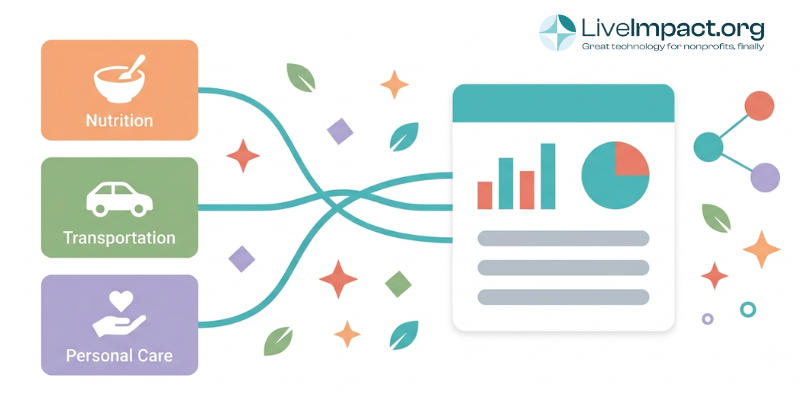
Funder reporting requirements add another layer. Many senior services organizations receive funding through Older Americans Act (OAA) Title III programs, administered through their state unit on aging and the national network of Area Agencies on Aging. OAA reporting requires service unit counts by category (nutrition services, homemaker hours, personal care hours, transportation trips) tied to specific program codes. That structure is different from standard grant reporting, and software that isn’t designed for it creates significant manual work before every reporting deadline.
Finally, senior services organizations often operate at the intersection of multiple systems. A single client may receive services from a primary care provider, a Medicaid waiver program, a housing assistance program, and your organization simultaneously. Tracking referrals, warm handoffs, and coordinated care plans across those relationships is a core workflow, not an edge case.
Key Features Senior Services Organizations Need in Case Management Software
Home Visit and Field Documentation
Staff spend most of their time in clients’ homes, not at computers. Case management software needs to support mobile documentation with offline capability so field staff can log visit details, complete assessments, and update care notes from a phone or tablet without needing a reliable connection. If documentation has to wait until staff return to the office, it creates delays, increases error risk, and adds time back into an already stretched workday.
ADL and IADL Assessment Tracking
Activities of Daily Living (ADL) and Instrumental Activities of Daily Living (IADL) assessments are the standard framework for evaluating functional status in elder care. Software should support customizable assessment forms that track changes in functional status over time, capturing trend data across multiple assessments rather than isolated snapshots. When a client’s functional status declines across multiple quarterly assessments, that trend should be visible in the platform and usable for care planning and funder reporting without manual data assembly.
Older Americans Act Compliance and Funder Reporting
OAA Title III reporting requirements are specific enough that generic grant tracking tools tend to break down here. Organizations need to report service units delivered by type, tied to specific Catalog of Federal Domestic Assistance (CFDA) codes, matching the definitions their state unit on aging uses. Software that lets staff tag each service delivery event to a specific funding stream at the point of entry eliminates the spreadsheet work that typically consumes days before each report is due.
The Administration for Community Living provides guidance on OAA program structure and reporting expectations for organizations navigating this for the first time.
Care Coordination and Referral Tracking
Senior services clients frequently move between providers and programs. Software should track referrals made, referrals completed, and referrals that fell through, with enough detail to follow up on what happened. Coordinated care plans that multiple staff members can view and update prevent the “left hand doesn’t know what the right hand is doing” problem that surfaces when clients interact with both your staff and outside providers.
HIPAA Compliance
Any organization documenting health-related information for older adults needs a platform that handles electronic protected health information appropriately. That means encryption at rest and in transit, role-based access controls so staff see only what they need, audit logging that records who accessed or changed a record and when, and a signed Business Associate Agreement from the vendor. These belong in the standard platform, included in base pricing.
Our guide to HIPAA-compliant case management software covers what HIPAA compliance requires in a nonprofit case management context, including the specific questions to ask vendors before signing.
Volunteer Program Integration
Many senior services organizations run volunteer programs alongside their case management work. Meals on Wheels programs, friendly visitor programs, and transportation volunteer networks all need coordination. When volunteer records, delivery logs, and client service records live in the same system, staff avoid the manual reconciliation work that comes from maintaining separate databases. This is a secondary need for most organizations, but it’s worth evaluating if your programs overlap.
Case Management Software Options for Senior Services Organizations
The platforms below cover the range of tools senior services organizations typically evaluate. Costs vary widely by pricing model and organization size, so treat any comparison as a starting point for conversations with vendors rather than a definitive ranking.
| Platform | Pricing Model | HIPAA Compliant | Customizable Forms | Volunteer Integration | Best Fit |
|---|---|---|---|---|---|
| LiveImpact | Flat-rate | ⬤ Yes | ⬤ Staff-configured | ⬤ Built-in | Small to mid-sized orgs that need customizable workflows |
| Bonterra Apricot | Per-user (tiered) | ⬤ Yes | ⬤ Included | ⬤ Not included | Human services orgs already familiar with the Apricot ecosystem |
| CaseWorthy | Custom quote | ⬤ Yes | ⬤ Included | ⬤ Not included | Larger multi-site agencies with dedicated IT support |
| CharityTracker | Per-user | ⬤ Verify with vendor | ⬤ Limited | ⬤ Not included | Small programs with basic intake and referral tracking needs |
| Salesforce | Per-user (tiered) | ⬤ Yes | ⬤ Included (developer-level) | ⬤ Via add-ons | Enterprise-level orgs with Salesforce admin resources |
⬤ Yes / Included
⬤ Partial / Limited
⬤ Not available
The case management software that works best for a senior services organization depends heavily on your program mix. An org running home-delivered meals, a friendly visitor program, and a care coordination program with an active development function has different needs than a stand-alone adult day program with a single funder. Mapping your reporting requirements before evaluating features will narrow the field considerably.
Questions to Ask Vendors Before Choosing
Most vendors will tell you their platform can do anything. These questions get past the sales deck and into what the software handles in practice.
- Does the platform support OAA Title III reporting formats, or will we need to export and reformat data before submitting to our state unit on aging? Ask them to walk through a specific example with your reporting codes.
- Can assessment forms be customized to our specific ADL/IADL framework without developer involvement? Program staff should be able to build and adjust forms independently, without routing every change through IT.
- How does the platform handle home visit documentation for field staff on mobile devices? Ask about offline capability specifically, since many senior services programs operate in areas with inconsistent connectivity.
- Is a Business Associate Agreement available, and what does HIPAA compliance actually include in your pricing tier? Some vendors offer BAAs only at higher tiers. Confirm before assuming.
- How does pricing scale as our team grows? Per-user pricing adds up quickly for organizations with large field teams or volunteer coordinators who need system access. Flat-rate pricing removes that variable entirely.
- What does implementation look like for an organization our size, and what does training cover? Ask specifically about staff who are less comfortable with technology and whether training materials remain available after go-live.
These aren’t the only questions worth asking, but they surface the issues that cause the most friction after a contract is signed. Our piece on the top case management software options for nonprofits covers the broader evaluation process if you’re earlier in your research.
How Senior Services Organizations Typically Use Case Management Software Day to Day
Understanding how a platform fits into actual workflows matters as much as its feature list. Senior services organizations tend to use case management software across a few distinct patterns.
Intake and assessment happen first. A care coordinator takes an initial call from a new client or a referral from a hospital discharge planner, creates a client record, and completes an intake form that captures demographics, living situation, functional status, and initial service needs. If the platform supports customizable forms, this intake can be built to match the organization’s specific intake protocol rather than a generic template.
Service delivery and documentation happen continuously. Field staff log home visits, complete ADL assessments on a scheduled basis, note any changes in client status, and record services delivered. In a well-configured platform, this documentation takes minutes per visit rather than being deferred to end-of-day catch-up.
Referral coordination runs in parallel. When a client needs a service the organization doesn’t provide, staff log the referral, record the outcome, and follow up. This creates a documentation trail that’s useful both for client care and for demonstrating coordinated service delivery to funders.
Reporting closes the loop. Monthly or quarterly, program managers pull service unit counts by funding stream, review outcome trends, and prepare reports for OAA and other funders. In organizations where this still happens in spreadsheets, software that makes it automatic is often the single biggest operational improvement.
This pattern overlaps substantially with other compliance-heavy human services verticals. The behavioral health case management post covers similar themes for organizations working at the intersection of mental health and social services.
Frequently Asked Questions
What is case management software for senior services?
Case management software for senior services is a platform that helps elder care nonprofits and area agencies on aging manage client intake, document home visits and assessments, track services delivered, coordinate referrals to partner agencies, and generate compliance reports for funders including OAA Title III programs. It replaces paper files and spreadsheets with a centralized system built around the workflows of senior services delivery.
Do area agencies on aging need HIPAA-compliant software?
Area agencies on aging and senior services nonprofits that collect or document health-related information about clients, including functional assessments, medication reviews, or coordination with medical providers, need HIPAA-compliant software. Any platform handling electronic protected health information must offer encryption, access controls, audit logging, and a signed Business Associate Agreement. Organizations should confirm these features are included in their pricing tier, not offered as paid add-ons.
What is Older Americans Act reporting and how does software help?
OAA Title III funding requires senior services organizations to report service units delivered by type (nutrition, homemaker, personal care, transportation) tied to specific program codes. Software that tags services to funding streams at the point of delivery eliminates the manual assembly work that typically consumes staff time before each reporting deadline. Platforms with OAA-aware reporting templates can reduce that process from days to a matter of hours.
How much does case management software cost for senior services nonprofits?
Pricing varies significantly by platform and pricing model. Per-user platforms charge for each staff member, volunteer coordinator, and administrator with system access, which can add up for organizations with large field teams. Flat-rate platforms charge a single monthly fee regardless of user count. See LiveImpact’s pricing page for current flat-rate details. Total cost of ownership should also account for implementation, training, and any add-on fees for reporting features that may not be included in base pricing.
What is the difference between a CRM and case management software for senior services?
A CRM tracks relationships with donors and supporters. Case management software tracks clients, services delivered, and program outcomes. Senior services organizations typically need both: case management for program operations and a donor CRM for fundraising. Platforms that integrate both functions eliminate the need to maintain two separate systems and the manual data transfers between them.
Can senior services software handle volunteer coordination for programs like Meals on Wheels?
Some platforms integrate volunteer coordination directly with case management, allowing organizations to track driver routes, log delivery completions, and connect volunteer records to client service records. This is particularly useful for Meals on Wheels programs where the volunteer interaction is itself the service delivery event. Standalone volunteer management tools work too, though they require manual reconciliation with your case management data.
Choosing Software That Fits Your Programs
Senior services organizations carry a heavier documentation and compliance burden than most human services programs. OAA reporting requirements, HIPAA obligations, care coordination workflows, and mobile field documentation needs all narrow the field of software that can handle the work without creating new administrative problems.
The right platform makes service delivery smoother, cuts the time staff spend on reporting, and gives program directors the data they need to demonstrate impact to funders and boards. The wrong one adds friction to every workflow it touches.
If you’re evaluating nonprofit case management software for your senior services programs, take a close look at OAA reporting support and mobile field documentation before anything else. Those two capabilities are where most platforms either prove themselves or fall short. Schedule a demo with LiveImpact to see how those workflows look in a fully configurable system.